SEC Weighs in on Molecule’s Route for Token Holders To Gain Equity in Scientific Projects
The SEC has issued a No-Action Letter for Molecule's Coin-to-Company model, our novel legal and financial infrastructure that allows capital to flow into promising research projects.

Molecule's Coin-to-Company model provides a way for people to contribute to early research and receive tokens, paired with a legally grounded way for token holders to gain equity ownership in the projects they support. This week the US Securities and Exchange Commission (SEC) has issued a No-Action Letter, meaning the SEC's staff has reviewed the model and will not recommend enforcement action against research projects that sell tokens under it.
No-Action Letters are among the most pragmatic tools for navigating the regulatory uncertainty that comes with pioneering token-based science funding. The SEC’s decision to issue the No-Action Letter significantly reduces this uncertainty, and acts as a validator to potential institutional investors who need to operate within a clear, predictable regulatory framework.
From our Chief Legal Officer, Benjamin Snipes; “Molecule AG and the Coin-to-Company No Action Letter (the “Molecule NAL”) brings together the best of blockchains with traditional equity structures to accelerate the production and commercialization of science in the US, Europe and worldwide. I want to thank the unwavering support of Molecule’s CEO Paul Kohlhaas, CCO Aaron Weaver, the Molecule board, the Cahill Gordon & Reindel team of Lewis Cohen, Sarah Chen and Chloe Chan, and the wonderful team at Northwell Health Equity Partners, who all held on through every turn to reach this result together.”
The Coin-to-Company Model
The Coin-to-Company (C2C) model is a legal framework that reconciles community participation with US securities regulation by keeping tokens and equity legally separate but functioning in the same system. The core proposition is that project tokens and equity securities serve different yet complementary purposes to fund and support science through every stage of its development toward commercialization.
Each research project runs on two connected entities:
- The company (LabsCo): a US company that creates and distributes the project's tokens, runs the business, holds the intellectual property, works with the research team and, when the time is right, issues equity.
- The DAO: a nonprofit association of token holders that may protect members from personal liability, receives intellectual property the community contributes and passes it to the company, and organises the community around the research mission. It holds no material assets and runs no for-profit business.
The company creates and distributes tokens, but owning a token conveys no equity or financial interest in the company. Token distribution is a commercial transaction, a sale of utility, that provides non-financial benefits in regards to the research project.
From tokenholder to shareholder
The C2C model's most distinctive element is the structured pathway a token holder can take toward equity, if the company decides to offer it:
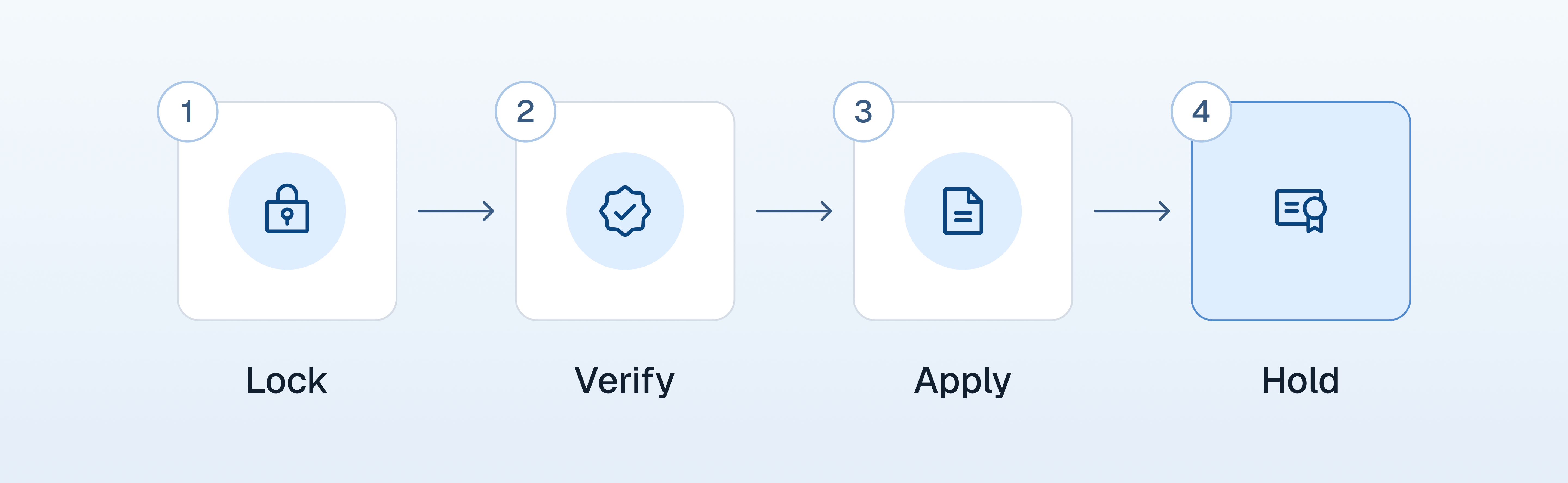
- Token locking. Voluntary and reversible unless equity is received, and it creates no obligation on the company.
- KYC/AML screening. Standard identity verification for securities compliance.
- Equity application. Holders of locked tokens can apply for equity, and approval is entirely at the company's discretion.
- Equity issuance. Equity is issued under a standard US securities exemption, such as Regulation D for investors providing capital or Rule 701 for community members providing genuine services to the project.
Equity is issued through documented, compliant securities transactions entirely separate from token ownership. Tokens are never consideration for equity and never converted into it, so the token and the equity remain legally distinct instruments at all times.
For research projects being commercialized through the Coin-to-Company model, shares so acquired remain eligible for all of the tax benefits normally expected of venture-stage companies, such as the potential exclusion of federal capital gains under Qualified Small Business Stock, subject to satisfaction of issuer-level, shareholder-level, holding-period, active-business, redemption, and gain-limitation requirements.
Looking to the future
Our Chief Commercial Officer, Aaron Weaver reflected on the impact we hope to have; “Financial innovation plays an understated role in scientific progress. When Y Combinator published the SAFE in 2013, it gave founders and early investors a simple, standard way to transact, and it became the default for early-stage startup funding. Coin-to-Company aims to do something similar for early-stage research, giving communities a common structure to support science and token holders a defined, compliant path to apply for equity. With today’s letter, we hope it can become for scientific R&D what the SAFE became for startups.”
In the coming weeks we will see the first project in the Molecule ecosystem utilize the Coin-to-Company model.
About the author

Ella McCarthy-Page
BSc(Hons) in Biochemistry and Materials Science. A communicator working at the intersection of biotechnology and web3.